
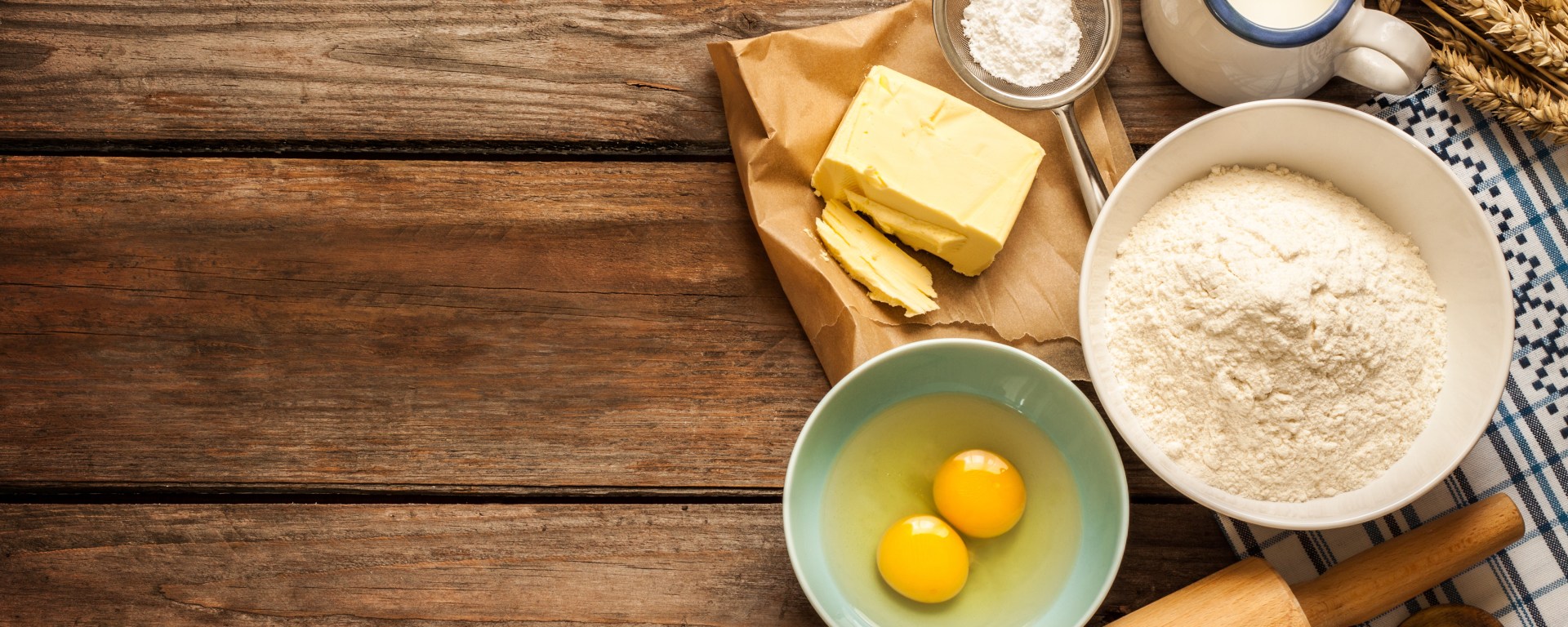
Whether you call them pastry doughs or pie crust doughs, their purpose is the same. Pâte brisée is generally used for open-faced tarts, not pies, but the only real difference is in the ingredients: pâte brisée has eggs, and pie crust doesn’t.
For a fully baked pie crust, bake at 350 degrees for about 30 minutes or until golden brown. If you need to partially bake a crust, bake at 350 degrees or until it just begins to brown – usually about 10 minutes.
It’s up to you how much to brown your pie and pastry crusts; use your eyes and your appetite, and remember that not all ovens bake evenly so watch carefully during the bake.
Grammy’s Pie Crust
Still works better than anything else, flakes beautifully, doesn’t get soggy, and even tastes good. What more do you want?
- 2 cups flour
- ¾ teaspoon salt
- ¾ cup butter
- 5 tablespoons ice water
Pour about half a cup of cold water into a glass, and add a couple of ice cubes. Set aside. Cut butter into flour and salt with a pastry blender or fork (or process in food processor) until mix looks like medium crumbs. Add ice water one tablespoon at a time, and mix until dough pulls away from the side of the bowl. Dust the surface with scant amount of flour and roll it out.* Makes one 8- to 9-inch crust.
*This is where a silicone mat comes in very, very handy – you can roll the dough out with a minimum of added flour, and the dough won’t stick to the silicone.
Pâte Brisée
Usually used for open-faced shallow tarts. This is the family recipe; the Paul Bocuse cookbook recipes for pâte brisée call for more flour (3 ¾ cups) and 3 eggs, and other cookbooks seem to fall somewhere in the middle. You also can make it with one teaspoon of salt and one teaspoon of sugar, if you need a sweeter crust. Carla generally regards Paul Bocuse’s recipes as authoritative, but as all of the recipes she has tried work beautifully she has finally come to suspect that tart crust doesn’t require pathologically exact measurement of ingredients. Makes two 8- to 9-inch crusts.
- 2 ⅔ cups flour
- 1 cup cold butter, cut into 1-inch cubes
- 2 scant teaspoons salt
- 1 egg combined with 1 tablespoon water OR ½ cup ice water
Combine all ingredients with a pastry blender or fork (or process in food processor) until dough forms. Divide into two equal parts, cover with plastic wrap, and chill in refrigerator for at least an hour. Press dough into two tart or pie pans, and bake as desired.
Pâte Sablée
Basically, a sweet and crumbly (sablé means “sandy” in French) pie crust – nice for fruit or cream pies whose fillings aren’t going to be baked. Again, don’t worry too much about exact measurements. Use what you need to make the dough work for you. Makes one crust.
- 2 cups flour
- ¼ cup sugar
- 12 tablespoons softened butter*
- 1 egg
- Pinch salt
Combine all ingredients. Mix, or process in food processor, until dough forms. Press into pie or tart pan, and bake as desired.
*There are lots of recipes that insist the butter and sugar be creamed together before mixing with the rest of the ingredients. Yes, there’s a slight difference, but not enough to justify the extra step, in our opinion. Go ahead and try it if you’re curious, though.
Mom’s Crumb Crust
Mom used the now-discontinued Famous Chocolate Wafers for grasshopper pie, vanilla wafers for banana cream pie, and graham crackers for innumerable other pies. But why not try gingersnaps for cheesecake crust? Crushed Pirouettes or shortbread cookies? Or oatmeal cookies for a peach pie?
- 1 ½ cups crumbs
- ¼ cup sugar
- ½ cup melted butter
Mix ingredients together and press into pan. Prebaking at 350 degrees for 5-10 minutes isn’t required, but is helpful – it seals the surface of the crust a little, and makes it less vulnerable to soggy fillings.
 Around Our Table